

If you’ve spent any time on a school Chromebook or a locked-down office network, you’ve probably typed “unbanned G+” into a search bar at least once. It’s become one of the most searched gaming terms among students in 2026, and yet most people who search for it don’t fully understand what it actually is. This guide breaks down everything you need to know about what Unbanned G+ really means, why it’s exploding in popularity, whether it’s safe, and what alternatives exist if you want a similar experience without the risk.
What Is Unbanned G+?
Unbanned G+ refers to a category of browser-based unblocked gaming websites that let users play free HTML5 games without downloads, installs, or accounts, even on networks that normally restrict gaming sites, such as schools or workplaces. The “G+” tag has become shorthand across dozens of sites and mirrors, all promising instant, restriction-free access to hundreds or even thousands of casual games.
Rather than being one single official platform, Unbanned G+ is more of a loose network a naming trend adopted by many independent sites that host similar game libraries and use similar tricks to slip past web filters.
What “Unbanned G+” Actually Means
Breaking the phrase down helps clarify the confusion:
- Unbanned signals that the site is accessible even where gaming platforms are typically blocked.
- G is widely believed to reference Google, since many of these hubs are built and hosted using Google Sites, Google Drive, or similar Google-owned infrastructure to avoid detection by school firewalls.
- Plus (+) suggests an expanded or “extra” game library compared to older unblocked games sites.
Put together, the term essentially markets itself as “a bigger, harder-to-block version of unblocked games.”
The Origin Story: Where This Trend Actually Came From
Unblocked gaming sites aren’t new they’ve existed since the Flash game era of the early 2010s, when students found ways around school content filters to play simple browser games during downtime. When Flash was discontinued, many of these sites disappeared or transitioned to HTML5.
The “G+” naming convention picked up steam more recently as creators began hosting game mirrors on Google Sites and Google-hosted domains specifically because school IT departments rarely block Google’s own infrastructure outright. As older unblocked domains got flagged and banned one after another, new mirrors branded themselves “unbanned” to signal they were the next working version and the G+ label stuck as a recognizable badge across the ecosystem.
Why Unbanned G+ Is Growing So Fast
1. Zero Friction Access That Actually Works
There’s no sign-up, no download, and no waiting. Users click a link and the game loads directly in the browser tab, which matters enormously to students trying to squeeze in a game during a short break.
2. It Works Where Everything Else Fails
Most gaming platforms get blacklisted quickly by school and corporate filtering software. Because many G+ mirrors run on trusted domains like Google Sites, they often slip past filters that would otherwise catch a typical gaming URL.
3. HTML5 Means Any Device, Any Hardware
Since Flash’s discontinuation, HTML5 has become the standard for browser games. It runs smoothly on Chromebooks, budget laptops, and tablets without needing extra plugins or high-end specs.
4. A Decentralized Structure That’s Nearly Impossible to Kill
There isn’t one central website to shut down. When one mirror gets banned, another pops up within days, often with an almost identical game library, which keeps the overall trend alive even as individual links die.
5. Viral Sharing With Built-In Social Mechanics
Working links get shared rapidly through group chats, forums, and short-form videos, creating a constant cycle of rediscovery whenever an old link stops working.
6. Games Designed for Stolen Moments
The game libraries lean heavily on short, replayable formats: quick matches, endless runners, and simple puzzles built for five-minute windows rather than long sessions.
How These Game Hubs Actually Work
Most Unbanned G+ style sites follow a similar technical pattern:
| Step | What Happens |
|---|---|
| 1. Hosting | The site is built on a low-cost or free platform (often Google Sites) that’s less likely to appear on a school blocklist |
| 2. Game Embedding | Individual HTML5 games are embedded via iframes, pulling content from third-party game APIs or libraries |
| 3. Domain Cycling | When a mirror gets flagged, a near-identical version launches under a new URL |
| 4. Discovery | Links spread through search, social media, and word of mouth rather than paid advertising |
This structure explains why searching “unbanned G+” rarely returns the exact same website twice the ecosystem is built to keep moving.
What Games Are Actually on These Platforms?
Action Games
Fast-paced titles involving combat, obstacle courses, or physics-based chaos ragdoll platformers and shooter-style games are especially popular.
Puzzle & Strategy Games
Logic-based titles like block-stacking, match-three, and tower defense games that reward quick thinking over reflexes.
Multiplayer Games
Real-time competitive games, including battle-royale-style and 1v1 formats, where players face off against others online.
Retro & Classic Browser Games
Nostalgic titles reminiscent of early 2010s Flash games, plus endless runners and simple arcade classics that never really went out of style.
Why Students Search for Unbanned G+
The demand comes almost entirely from one group: students on managed school devices. Search interest spikes during school hours and drops sharply on weekends and holidays, which tells its own story. Students use these sites to fill short breaks, get around strict device policies, and access games their school network otherwise blocks — all without needing admin permissions or special software.
Is Unbanned G+ Safe? The Honest Answer
The honest answer is: it depends entirely on which site you land on. There’s no single official “Unbanned G+” authority verifying safety, which means quality and risk vary wildly between mirrors.
Potential risks include:
- Intrusive ads or redirect pop-ups on lower-quality clone sites
- Fake “download” buttons disguised as play buttons
- Sites collecting more data or permissions than necessary
- Inconsistent uptime, since mirrors get taken down often
What tends to be lower-risk:
- Sites that run games directly in-browser with no download prompts
- Pages with minimal, non-intrusive advertising
- Long-running, well-known mirrors with consistent branding
Because there’s no central regulator, the safest approach is treating every new “unbanned G+” link with a healthy dose of skepticism rather than assuming it’s automatically trustworthy.
Common Myths About Unbanned G+
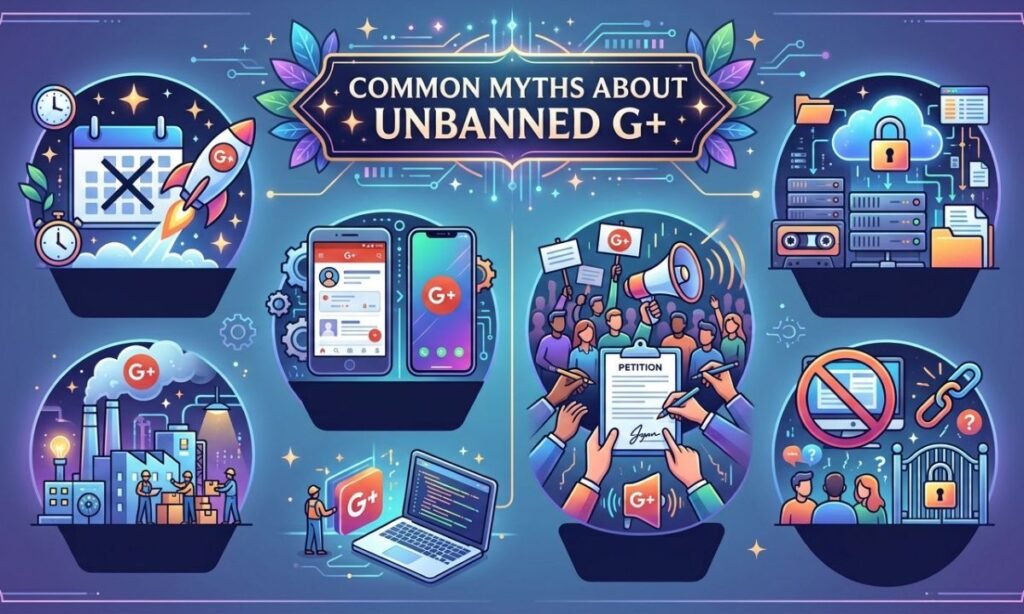
Myth #1: Unbanned G+ Is Illegal
It’s not illegal to visit these sites in most places the games themselves are usually free, legally licensed HTML5 titles, though playing them may violate a school or workplace’s acceptable use policy.
Myth #2: Every Unbanned G+ Site Is Safe
Because anyone can launch a similarly named mirror, quality and safety differ enormously from one site to the next.
Myth #3: It Can Never Be Blocked
Individual mirrors get blocked constantly; the trend survives only because new ones keep replacing the old ones.
The Google+ Confusion: Is Unbanned G+ Related to Google+?
No — Unbanned G+ has nothing to do with Google+, the social network Google shut down in 2019. The “G” in G+ refers to Google’s hosting infrastructure (like Google Sites), not the discontinued social platform. The naming overlap is coincidental and largely a byproduct of SEO-friendly branding rather than any real connection.
Pros and Cons of Unbanned G+
| Pros | Cons |
|---|---|
| Instant access, no downloads or accounts | No single trustworthy source — quality varies by mirror |
| Free to play | Ads and pop-ups can be intrusive on some sites |
| Works on Chromebooks and low-spec devices | Frequently taken down and replaced |
| Large, varied game libraries | May violate school or workplace network policies |
| No installation risk to the device itself | Some clones use misleading buttons or links |
Pros
- Fast, frictionless access to casual games
- No cost, no sign-up required
- Broad compatibility across devices and browsers
Cons
- Inconsistent safety standards across sites
- Short lifespan for individual mirrors
- Potential policy violations on managed networks
Legitimate Alternatives Worth Knowing
Browser-Based Gaming Platforms
Established platforms with long track records and transparent moderation offer a similar quick-play experience with more consistent safety standards.
Educational Gaming Websites
Many schools now provide sanctioned game libraries built specifically for approved break time, blending entertainment with light educational value.
Official Free-to-Play Games
Publisher-hosted browser games from major studios or app stores deliver the same instant-play convenience without relying on anonymous mirror sites.
Tips for Using Unbanned G+ Responsibly
Avoid Suspicious Clone Websites
Skip any site with excessive pop-ups, fake download prompts, or design that looks rushed or inconsistent.
Protect Your Privacy
Never enter personal information, passwords, or payment details on a free game site legitimate browser games never require them.
Balance Gaming With School or Work
Treat these games as short-break entertainment, not a replacement for focus during class or work hours, to avoid consequences with school or employer policies.
What the Future of Unbanned G+ Looks Like
As school network filters get smarter, expect the cat-and-mouse cycle to continue: mirrors will keep appearing under new names, while filtering software adapts to catch them faster. Longer term, more schools are likely to respond by offering their own curated, sanctioned game libraries, reducing the need for students to seek out unofficial mirrors in the first place. The core demand, though, isn’t going away: students will keep wanting quick, accessible entertainment during short breaks, and some version of this trend will likely persist in one form or another.
Conclusion
Unbanned G+ isn’t a single website; it’s a naming trend behind a scattered network of browser-based unblocked gaming hubs, most of them hosted on Google-friendly infrastructure to dodge school and workplace filters. The appeal is obvious: instant, free, no-download gaming that works almost anywhere. But because there’s no central authority behind the brand, safety and quality vary from one mirror to the next. If you’re going to explore this trend, stick to well-known, long-running sites, avoid anything asking for downloads or personal information, and consider official or school-sanctioned alternatives when they’re available.
FAQs
Is Unbanned G+ a real company or website?
No, it’s not a single official company; it’s a naming trend used by many independent unblocked gaming sites and mirrors.
Can Unbanned G+ get me in trouble at school?
Possibly, while the games themselves aren’t illegal, using them may violate your school’s acceptable device use policy.
Do I need to download anything to play?
No, these games run directly in your browser using HTML5, with no downloads or installations required.
Why do Unbanned G+ links keep changing?
Individual mirrors get blocked by filters over time, so new versions launch regularly to replace them.
Is Unbanned G+ the same as Google+?
No, they’re unrelated — the “G” refers to Google-hosted infrastructure, not the discontinued Google+ social network.
Are there safer alternatives to Unbanned G+?
Yes, established browser gaming platforms and school-approved educational game sites offer a similar experience with better safety standards.

I am a dedicated writer with over 3 years of experience researching word meanings, internet slang, abbreviations, and symbols. Through MeaningBright.com, I simplify complex meanings into clear, accurate, and easy-to-understand explanations, helping readers stay informed with reliable and engaging content.