

You are scrolling through a comment section and someone jumps in with “tbf, that’s a fair point.” It is short, it softens the disagreement, and it shows up everywhere from group chats to TikTok debates.
This guide breaks down exactly what TBF means, how it shifts across Snapchat, TikTok, Instagram, WhatsApp, and X, and how to tell the difference between a fair minded comment and a sharper, more direct one.
What Does TBF Mean?
TBF stands for “To Be Fair.” It is used to introduce a balanced perspective, acknowledge another side of an argument, or soften a statement that might otherwise sound harsh. Instead of fully agreeing or disagreeing, TBF signals that the person is weighing both sides before making their point.
What Does “To Be Fair” Mean?
The full phrase “to be fair” has been used in everyday English long before texting existed, often in debates, discussions, and casual conversations to introduce a more balanced viewpoint. TBF simply compresses that same idea into three quick letters for faster typing.
Example
“That movie was boring.” “TBF, the soundtrack was really good though.”
TBF Meaning in Text Messages
In regular texting, TBF usually appears right before a counterpoint or a piece of missing context. It helps soften criticism or add nuance without sounding like a full blown disagreement.
TBF Meaning on Snapchat
On Snapchat, TBF often shows up in casual streak conversations or reactions to stories, usually in a friendly, lighthearted tone rather than a serious one.
TBF Meaning on TikTok
On TikTok, TBF frequently appears in comment section debates, often used to defend a creator or add a fair counterpoint to criticism found in the video or other comments.
TBF Meaning on Instagram
On Instagram, TBF shows up in comment threads discussing opinions, trends, or public figures, usually offering a slightly more balanced take on whatever is being debated.
TBF Meaning on WhatsApp
On WhatsApp, TBF tends to appear in personal or group chats, often used to acknowledge someone’s point during a friendly disagreement or a casual debate among friends.
TBF Meaning on X (Formerly Twitter)
On X, TBF is extremely common in reply threads and quote posts, where it introduces a counterargument or adds missing context to an ongoing discussion.
TBF Meaning in Gaming
In gaming chats, TBF is often used to fairly critique strategy or gameplay without sounding overly harsh, helping teammates offer feedback while still keeping the tone respectful.
Can TBF Mean “To Be Frank”?
Yes, though far less commonly. In some conversations, TBF can stand in for “To Be Frank,” which functions similarly to “To Be Honest.” This usage is much rarer than the standard “To Be Fair” meaning.
How Do You Know Which Meaning Is Correct?
If it introduces balance:
It almost certainly means “To Be Fair,” acknowledging another side of the conversation.
If it introduces honesty:
It may lean toward “To Be Frank,” especially if the sentence feels more direct or blunt than balanced.
Why Do People Use TBF? (Psychology)
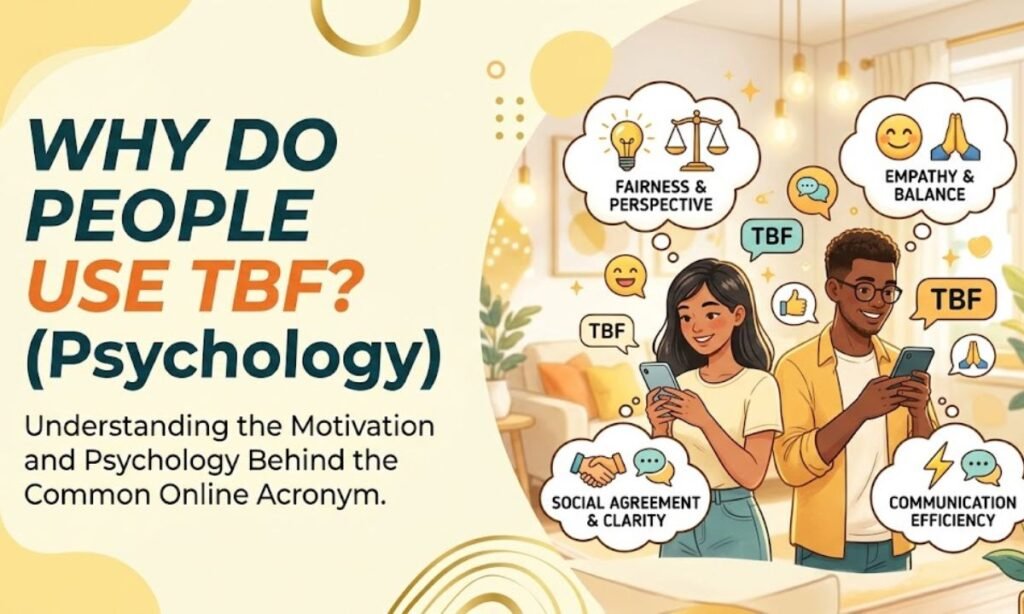
People use TBF to soften disagreement while still expressing their real opinion. It signals emotional awareness, showing that the speaker has considered another perspective rather than dismissing it outright.
A Real Communication Observation
In real conversations, TBF often works as a small social cushion. It allows someone to disagree or add nuance without the exchange feeling confrontational, keeping the overall tone cooperative rather than combative.
Tone Explained
- Friendly and casual in most everyday texting
- Slightly defensive when used in comment section debates
- Neutral and balanced in group chat discussions
- Occasionally sarcastic when paired with a joking follow up
Common Mistakes People Make
Mistake #1: Thinking TBF Always Means “To Be Frank”
Most of the time, TBF means “To Be Fair,” and assuming otherwise can lead to misreading the entire sentence.
Mistake #2: Using TBF Before Every Opinion
Overusing TBF can weaken its purpose, since it works best when genuinely introducing balance rather than as a habitual filler phrase.
Mistake #3: Ignoring Context
The rest of the sentence almost always clarifies tone, so skipping over it can lead to misunderstanding whether the comment is friendly or slightly critical.
Is TBF Rude?
No, TBF is not inherently rude. It usually softens a statement rather than sharpening it, though sarcasm or a dismissive tone in the surrounding message can occasionally make it feel less friendly.
Quick Context Guide
| Platform | Typical Tone |
|---|---|
| Texting | Casual, softens disagreement |
| Snapchat | Friendly, lighthearted |
| TikTok | Defensive, used in debates |
| Balanced, opinion based | |
| Casual, personal discussions | |
| X | Direct, used in reply threads |
When Should You Use TBF?
- When you want to acknowledge another person’s point before adding your own
- When softening criticism during a casual conversation
- When adding missing context to a discussion
Example 1
“He didn’t even apologize.” “TBF, he probably didn’t realize what happened.”
Example 2
“This show got boring fast.” “TBF, the first few episodes were actually really strong.”
When Should You Avoid Using TBF?
- In formal emails or professional reports
- During serious, emotionally heavy conversations
- When speaking with someone unfamiliar with internet slang
- In academic or highly formal writing
TBF vs Similar Internet Abbreviations
TBF is often grouped with other short reaction based abbreviations used in casual conversation.
Quick Comparison
| Abbreviation | Meaning | Typical Use |
|---|---|---|
| TBF | To be fair | Introduces balance or a counterpoint |
| TBH | To be honest | Introduces a direct, honest opinion |
| IMO | In my opinion | States a personal viewpoint |
| NGL | Not gonna lie | Introduces a candid admission |
TBF vs TBH
TBF (To Be Fair)
TBF leans toward balance, often acknowledging another perspective before making a point.
TBH (To Be Honest)
TBH leans toward directness, often introducing a strong or blunt personal opinion without necessarily balancing both sides.
Why People Use TBF (Communication Psychology)
Short digital abbreviations like TBF let people manage disagreement more smoothly. By signaling fairness first, the speaker reduces the chance of sounding confrontational, even while still making their actual point clear.
A Real-Life Communication Insight
Many communication patterns show that people reach for TBF specifically in moments of mild disagreement, using it as a bridge between two differing opinions rather than picking a hard side immediately.
A Common Mistake Many People Make
Some assume TBF only works in negative or corrective contexts, when in reality it works just as well when adding a positive counterpoint to an otherwise negative conversation.
Cultural Differences
TBF is especially common in British English and has spread widely through UK based social media users before becoming popular internationally. In American texting culture, it appears just as often, though TBH and NGL sometimes take its place in similar situations.
How to Respond to TBF
Friendly Responses
“Fair point, I hadn’t thought of it that way.”
Neutral Responses
“Okay, that makes sense.”
Playful Responses
“Look at you being all diplomatic.”
Smart and Confident Responses
“True, though I still think my point stands.”
TBF Examples in Everyday Conversations
- “She was late again.” “TBF, traffic today was really bad.”
- “This song is overrated.” “TBF, the production is actually pretty impressive.”
- “He barely studied.” “TBF, he had a lot going on this week.”
- “That restaurant was overpriced.” “TBF, the portions were huge though.”
- “You never text back.” “TBF, work has been completely overwhelming lately.”
Frequently Asked Questions
What does TBF mean in texting?
TBF stands for “To Be Fair,” used to introduce a balanced perspective or soften a disagreement in casual texting.
What does TBF mean on Snapchat?
On Snapchat, TBF usually keeps the same meaning, appearing casually in friendly, lighthearted conversations.
What does TBF mean on TikTok?
On TikTok, TBF often appears in comment debates, offering a fair counterpoint or defending someone’s perspective.
Can TBF mean “To Be Frank”?
Yes, though rarely, TBF can occasionally stand for “To Be Frank,” similar in tone to “To Be Honest.”
Is TBF rude?
No, TBF is generally not rude, since it usually softens a statement rather than making it harsher.
Should I use TBF in professional emails?
No, TBF is casual internet slang and should be avoided in formal or professional written communication.
Final Thoughts
TBF is a small but genuinely useful piece of internet language, mostly standing for “To Be Fair” and used to introduce balance, context, or a gentle counterpoint during a conversation. Its less common meaning, “To Be Frank,” appears occasionally but rarely overtakes the dominant definition.
As always, tone and context reveal the real meaning far more reliably than the letters alone. Once you notice how TBF functions in a sentence, it becomes just another simple, useful part of everyday digital conversation.

I am a dedicated writer with over 3 years of experience researching word meanings, internet slang, abbreviations, and symbols. Through MeaningBright.com, I simplify complex meanings into clear, accurate, and easy-to-understand explanations, helping readers stay informed with reliable and engaging content.