

Seeing “LLY” pop up at the end of a text can leave you pausing for a second, especially if it comes from someone you’re close to. Is it a casual sign-off, or does it mean something deeper? This short acronym has become a common part of everyday texting, and its meaning shifts slightly depending on who sends it and why.
This guide breaks down the real LLY meaning in text, its origin, how it’s used across different apps, and how to reply the right way.
What Does LLY Mean in Text & Chat?
LLY most commonly stands for “Love You Lots.” It’s a warm, casual way to express affection without sounding too formal or too intense. People use it to end conversations, react to sweet moments, or simply show they care.
It’s not always romantic. LLY is often shared between close friends and family members too, working almost like a quick, affectionate goodbye.
Quick Chat Examples
- “Talk tomorrow, lly!”
- “Thanks for listening today, lly.”
- “Good night, lly.”
- “You always make me laugh, lly.”
LLY Meaning From a Girl in Text
When a girl sends LLY, it usually signals comfort and closeness with the person she’s texting. It can mean genuine romantic affection, or it can simply reflect a strong, trusted friendship. Reading the rest of the conversation gives the clearest idea of which one it is.
Full Form, Stands For & Short Meaning of LLY
While “Love You Lots” is the most widely accepted meaning, LLY has a few variations depending on the group using it.
Short Meaning of LLY
- Love You Lots (most common)
- Love You Long
- Loving You Always
- Literally Love You
An older, less common version, “Licking Love You,” still exists in some slang dictionaries but is rarely used in modern chats.
Why People Prefer Short Forms
Texting culture favors speed. Typing three letters instead of a full sentence keeps conversations quick without losing the emotional message behind it.
Tone of LLY
LLY generally carries a warm, caring, and informal tone. It’s rarely used sarcastically and almost always reflects genuine affection or appreciation.
Origin, History & First Known Use of LLY
LLY grew out of early texting and social media culture, where character limits and fast typing pushed people to shorten common phrases. It follows the same pattern as “ILY” (I Love You), evolving into a slightly softer, more casual variant.
Its rise closely followed platforms like MySpace, Facebook, and early SMS messaging, before spreading further through modern apps.
Why It Spread So Fast
- It’s short and easy to type quickly.
- It fits naturally into casual, fast-paced conversations.
- It works for both romantic and platonic relationships.
- Younger users adopted it as part of everyday digital language.
How People Use LLY in Daily Conversations
LLY usually appears at the end of a message, working as a soft, affectionate close rather than the main point of the conversation.
Common Situations
- Ending a text conversation on a warm note
- Responding to a sweet or thoughtful message
- Signing off after a phone call or video chat
- Reacting to a friend’s kind gesture
Why It Feels Popular
LLY feels light and non-committal compared to a full “I love you,” making it comfortable to use even in newer friendships or early-stage romantic chats.
Common Emoji Pairings
- LLY (heart emoji)
- LLY (hugging emoji)
- LLY (smiling face emoji)
LLY Meaning Across WhatsApp, Instagram, TikTok & Snapchat
The core meaning of LLY stays the same everywhere, but how it’s used can shift slightly based on the platform.
Mostly used in personal chats between friends, family, or partners, often at the end of longer conversations.
Common in DMs and comments, especially replying to a sweet post or photo.
TikTok
Used in comment sections to react warmly to relatable or emotional videos.
Snapchat
Frequently appears in snap captions or chat streaks as a quick, caring sign-off.
Different Meanings of LLY in Other Fields
Outside of texting slang, the letters LLY rarely carry any official or technical meaning. It’s important not to confuse the acronym with unrelated terms that share the same letters.
| Field | Possible Meaning | Common Usage |
|---|---|---|
| Texting slang | Love You Lots | Everyday chats and social media |
| Botany | Lily (flower reference) | Sometimes confused due to spelling similarity |
| Business/Finance | Rarely used as an acronym | No standard recognized meaning |
| Gaming chat | Same as texting slang | Used casually among players |
Possible Alternative Meanings
Some smaller or regional friend groups may use LLY loosely to mean “Love Ya” without deeper romantic intent.
Why Context Matters
The same three letters can carry different emotional weight depending on the relationship, the platform, and the tone of the surrounding conversation.
Common Confusions, Mistakes & Wrong Interpretations
Because LLY is short, it’s sometimes misunderstood, especially by people unfamiliar with texting slang.
Common Mistakes
- Confusing LLY with “LOL” due to similar letter patterns
- Assuming it always means romantic love
- Overthinking a simple, friendly sign-off
Wrong Interpretations
- Thinking LLY is rude or sarcastic
- Believing it’s only used by couples
- Assuming it has a hidden negative meaning
Tips to Avoid Confusion
- Look at the full conversation, not just the acronym.
- Consider your relationship with the sender.
- If unsure, simply ask what they meant.
Similar Terms, Alternatives & Related Slang
LLY belongs to a wider family of affectionate texting abbreviations, each with subtle differences in tone and intensity.
| Term | Full Meaning | Typical Tone |
|---|---|---|
| ILY | I Love You | Direct and stronger |
| LY | Love You | Simple and quick |
| LYSM | Love You So Much | More intense affection |
| LYK | Love You Kid/Lots | Casual, friendly |
| ILYSM | I Love You So Much | Very strong emotional weight |
Popular Related Terms
Most of these terms exist to express affection quickly while matching the pace of digital conversations.
Similar Emotional Slang
Terms like “TY” (thank you) or “GN” (good night) follow the same shorthand pattern, prioritizing speed over full sentences.
Why Slang Keeps Growing
As messaging apps evolve, new abbreviations continue to form, often blending emotion with efficiency in ways formal language doesn’t allow.
When Should You Use LLY in a Text?
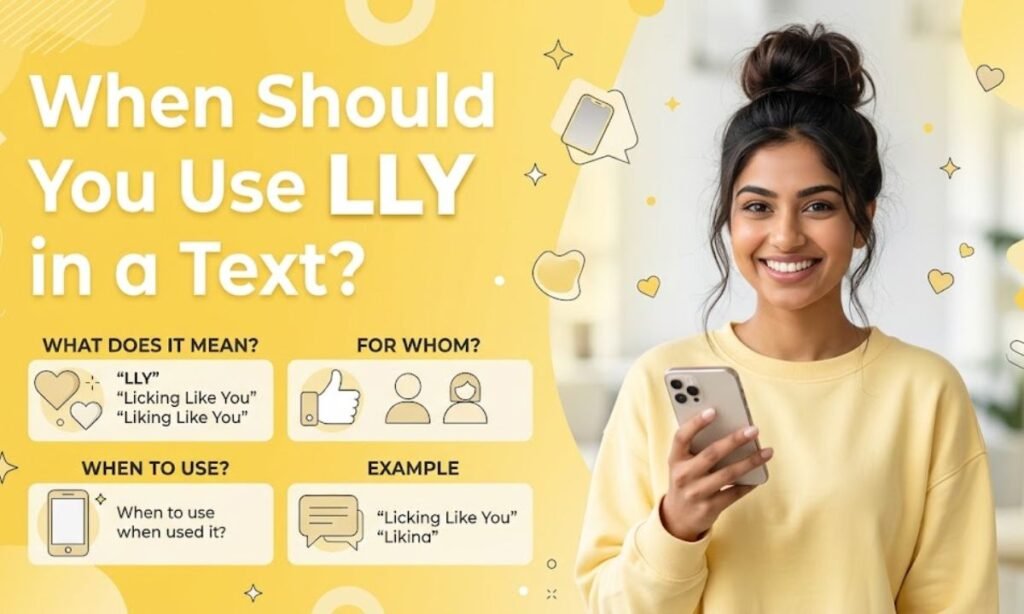
LLY works best in relationships where a level of comfort and familiarity already exists. Using it too early with someone new can feel forward or confusing.
Examples of LLY in Real Chat Situations
- After a long, meaningful conversation with a close friend
- At the end of a supportive message to family
- While texting a partner good night
- Responding to someone who shared good news
Quick Examples List
- “Proud of you today, lly.”
- “Miss you already, lly.”
- “Thanks for today, lly.”
- “Sleep well, lly.”
How to Reply When Someone Says LLY
Matching the tone of the message helps you respond naturally without overthinking it.
Friendly Replies
- “Lly too!”
- “Love you too, always here.”
Romantic Replies
- “Lly more than you know.”
- “You mean everything to me, lly.”
Casual Responses
- “Aww, lly!”
- “Same here!”
Tips for Responding
- Mirror the energy of the original message.
- Add an emoji if the conversation feels warm and casual.
- Keep it simple; LLY doesn’t require a long reply.
Is LLY Still Popular? Trends & Online Usage
LLY remains widely used, especially among younger users who prefer quick, expressive texting shortcuts over longer phrases.
Where It Is Most Popular
It’s most common among teens and young adults active on Snapchat, Instagram, and TikTok.
Why It Continues to Trend
Its short length and soft emotional tone make it easy to use across many types of relationships without feeling too intense.
Will It Stay Popular?
As long as fast, casual texting remains the norm, simple affectionate acronyms like LLY are likely to stay relevant.
LLY vs. Similar Texting Abbreviations
Compared to other similar terms, LLY sits in a comfortable middle ground, warmer than a plain “LY,” but softer than “ILYSM.”
- LLY feels casual and safe for both friends and partners.
- ILY feels more direct and often more serious.
- LYSM and ILYSM carry stronger emotional intensity.
- LY is the simplest and most neutral option.
Choosing between them usually comes down to how deep the emotional message needs to feel in that specific conversation.
Final Thoughts
LLY may only be three letters, but it carries genuine warmth in modern texting culture. Whether it’s shared between close friends, family, or someone special, it offers a quick, comfortable way to express care without overcomplicating the message. Understanding its meaning, tone, and context helps you use it naturally and respond to it with confidence the next time it shows up in your chats.
Frequently Asked Questions
What does LLY mean in a text message?
LLY most commonly means “Love You Lots,” used to express warm, casual affection.
Does LLY always mean romantic love?
No, it’s often used between friends and family as a caring sign-off, not just romantically.
Is LLY the same as ILY?
They’re similar, but ILY feels more direct and serious, while LLY feels softer and more casual.
Can I use LLY with someone I just met?
It’s better to avoid it early on, since LLY implies familiarity and closeness.
How do I reply when someone sends LLY?
Match their tone with a similar warm reply, like “Lly too!” or a simple heart emoji.
Is LLY still commonly used in 2026?
Yes, it remains popular, especially among younger users on Snapchat, Instagram, and TikTok.
Does LLY have any negative meaning?
No, LLY is almost always positive and reflects care, warmth, or affection.
Where did LLY originate?
It evolved from earlier texting slang like “ILY,” growing alongside social media and instant messaging platforms.

I am a dedicated writer with over 3 years of experience researching word meanings, internet slang, abbreviations, and symbols. Through MeaningBright.com, I simplify complex meanings into clear, accurate, and easy-to-understand explanations, helping readers stay informed with reliable and engaging content.