

Scrolling through a group chat or a comment section and suddenly seeing “GMFU” can leave you confused for a second. Is it an insult? A joke? Something serious? This short acronym carries a strong emotional punch, and knowing exactly what it means (and when it’s safe to use) can save you from an awkward reply.
This guide breaks down the real GMFU meaning in text, where it’s commonly used, and how to respond without misreading the tone.
What Does GMFU Mean in Text?
GMFU stands for “Got Me Fked Up.”** It’s internet slang used to express strong emotion, usually shock, disbelief, frustration, or disagreement.
In simple terms, when someone types GMFU, they’re reacting to something that caught them off guard, felt disrespectful, or simply didn’t sit right with them. It’s less of a factual statement and more of an emotional outburst packed into four letters.
The tone can shift depending on context:
- It can sound genuinely angry when someone feels disrespected.
- It can sound playful or dramatic between close friends.
- It can express confusion or being mentally overwhelmed by a situation.
GMFU is purely internet and texting slang. It has no recognized meaning in formal fields like medicine, aviation, or business communication.
Where Is GMFU Commonly Used?
GMFU shows up mostly in casual digital spaces where people communicate quickly and informally.
Common platforms:
- Text messages and group chats
- Instagram comments and captions
- TikTok video captions and reactions
- Snapchat conversations
- Twitter/X replies and quote posts
- Gaming chat platforms like Discord
Tone & usage style:
- Among friends, it’s often playful or exaggerated for effect.
- On social media, it reacts to shocking, bold, or unexpected content.
- In serious arguments, it can carry real anger or frustration.
- In dating chats, it can come across as aggressive if the context is unclear.
Examples of GMFU in Conversation
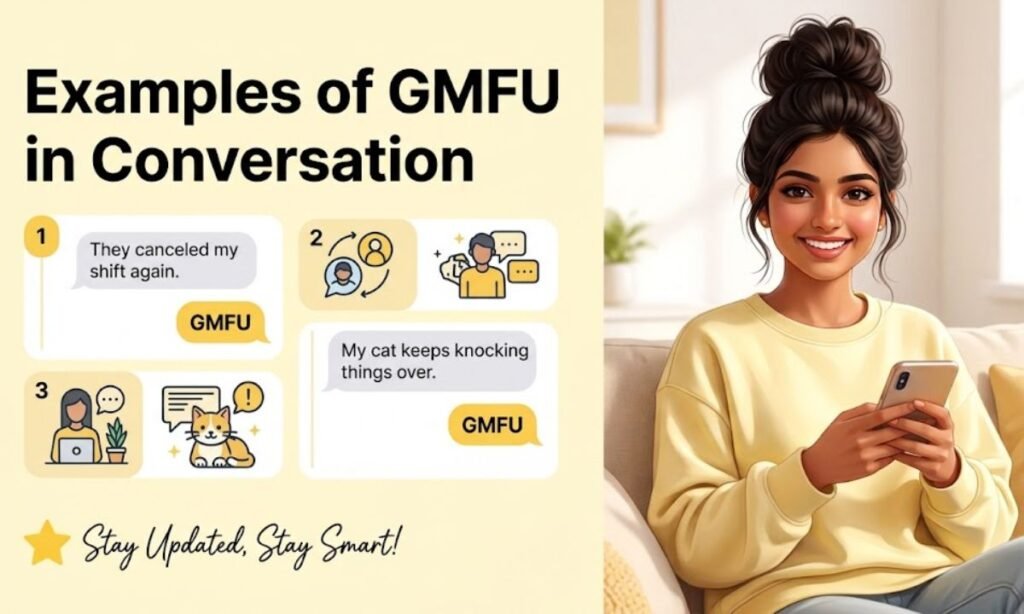
Seeing GMFU used in real sentences makes the meaning much easier to understand. Here are a few common examples:
- “You told everyone my secret? GMFU.”
- “Wait, the concert got cancelled? GMFU, I already bought the outfit.”
- “He said he’s not coming to the wedding. GMFU.”
- “GMFU, this pizza is ten dollars more than last week.”
- “You didn’t tell me you moved? GMFU, we live in the same city.”
In each case, the person isn’t necessarily furious. They’re expressing a strong reaction, somewhere between shock, annoyance, and disbelief.
When to Use and When Not to Use GMFU
Because GMFU carries implied profanity and strong emotion, context matters a lot. Using it in the wrong setting can come across as rude or confusing.
When to Use GMFU
- Texting close friends who understand your humor
- Reacting to shocking or unexpected news casually
- Commenting on surprising social media content
- Expressing playful disbelief in a light conversation
When Not to Use GMFU
- In professional emails or workplace chats
- With people you don’t know well
- In formal or customer-facing communication
- When the situation is genuinely sensitive or serious
Context of GMFU in Different Situations
The meaning behind GMFU doesn’t change, but the intensity behind it shifts based on who’s saying it and why. The table below breaks down how the same phrase can carry different weight.
| Situation | Likely Meaning | Tone |
|---|---|---|
| Friend jokes about your outfit | Playful disbelief | Light and funny |
| Someone disrespects you directly | Real frustration or anger | Serious |
| Reacting to a plot twist in a show | Shock or surprise | Excited |
| Price of something is unexpectedly high | Mild annoyance | Casual complaint |
| Someone cancels plans last minute | Disappointment mixed with frustration | Moderate |
Reading the relationship and the situation before reacting with GMFU helps avoid sending the wrong message.
Similar Slang Words or Alternatives
GMFU isn’t the only acronym used to express shock or frustration in text. Several similar terms exist, each with a slightly different intensity or tone.
| Slang | Meaning | Intensity Compared to GMFU |
|---|---|---|
| WTF | What The F**k | Similarly strong, often more blunt |
| SMH | Shaking My Head | Milder, more disappointment than shock |
| FR FR | For Real, For Real | No profanity, used for emphasis |
| NGL | Not Gonna Lie | Neutral, used before an honest opinion |
| IJBOL | I Just Burst Out Laughing | Lighter, used for humor rather than anger |
GMFU tends to sit in the middle, stronger than SMH, but often more casual than WTF depending on how it’s used.
Important Note About GMFU
GMFU includes implied profanity, even when censored with symbols. Because of this, it’s considered informal slang and isn’t suitable for professional, academic, or customer-facing communication.
It’s also worth remembering that GMFU doesn’t always mean anger. Depending on the message and emoji paired with it, it can mean shock, humor, confusion, or even affectionate teasing between close friends.
Other Meanings of GMFU in Text
While “Got Me F**ked Up” is by far the most common and widely accepted meaning, a few things are worth clarifying:
- GMFU does not have an official meaning in technical, medical, or business fields.
- In song lyrics, it usually carries the same emotional meaning, frustration, confusion, or disbelief, depending on the song’s theme.
- Some people mistakenly assume it’s always negative, but tone and context often soften its meaning into something playful.
There isn’t a widely recognized “alternate” definition outside of texting and internet culture, so if you see GMFU online, it almost always points back to this slang phrase.
How to Reply When Someone Says GMFU
If someone sends you GMFU, how you respond depends on the context of the conversation.
- If it’s playful: reply with humor, like “Lol I know, right?” or a relatable meme.
- If it seems serious: ask a clarifying question, such as “Wait, what happened?”
- If it feels aggressive or directed at you: address it calmly and ask what specifically upset them.
- If it’s reacting to content online: a simple agreement or reaction works fine, since it’s usually not meant personally.
Reading the rest of the message alongside GMFU almost always makes the intended tone clear.
Conclusion
GMFU might look intense at first glance, but once you understand the context behind it, it’s a fairly common way people express shock, frustration, or disbelief in casual digital conversations. Whether it’s used jokingly between friends or seriously in a heated exchange, the key is paying attention to tone, relationship, and platform before reacting. Now that you know what GMFU stands for and how it’s used, you won’t be left guessing the next time it shows up in your messages.
Frequently Asked Questions
What does GMFU mean in a text message?
GMFU stands for “Got Me F**ked Up,” a slang phrase used to express shock, disbelief, or frustration.
Is GMFU always used in anger?
No, it can also express humor, confusion, or playful disbelief depending on the context.
Is it okay to use GMFU in professional messages?
No, GMFU includes implied profanity and should be avoided in formal or workplace communication.
Is GMFU the same as WTF?
They’re similar in tone, but GMFU is often slightly more casual, while WTF can feel blunter.
Where did GMFU originate?
GMFU comes from American internet and texting slang, gaining wider popularity through social media platforms.
Can GMFU be used in a romantic or flirty context?
Yes, it’s sometimes used playfully between couples to express teasing shock or disbelief.
How should I reply if someone sends me GMFU?
Match their tone, respond with humor if it’s playful, or ask what happened if it seems serious.
Does GMFU have a technical meaning outside slang?
No, it has no recognized meaning in fields like medicine, aviation, or business terminology.

I am a dedicated writer with over 3 years of experience researching word meanings, internet slang, abbreviations, and symbols. Through MeaningBright.com, I simplify complex meanings into clear, accurate, and easy-to-understand explanations, helping readers stay informed with reliable and engaging content.